
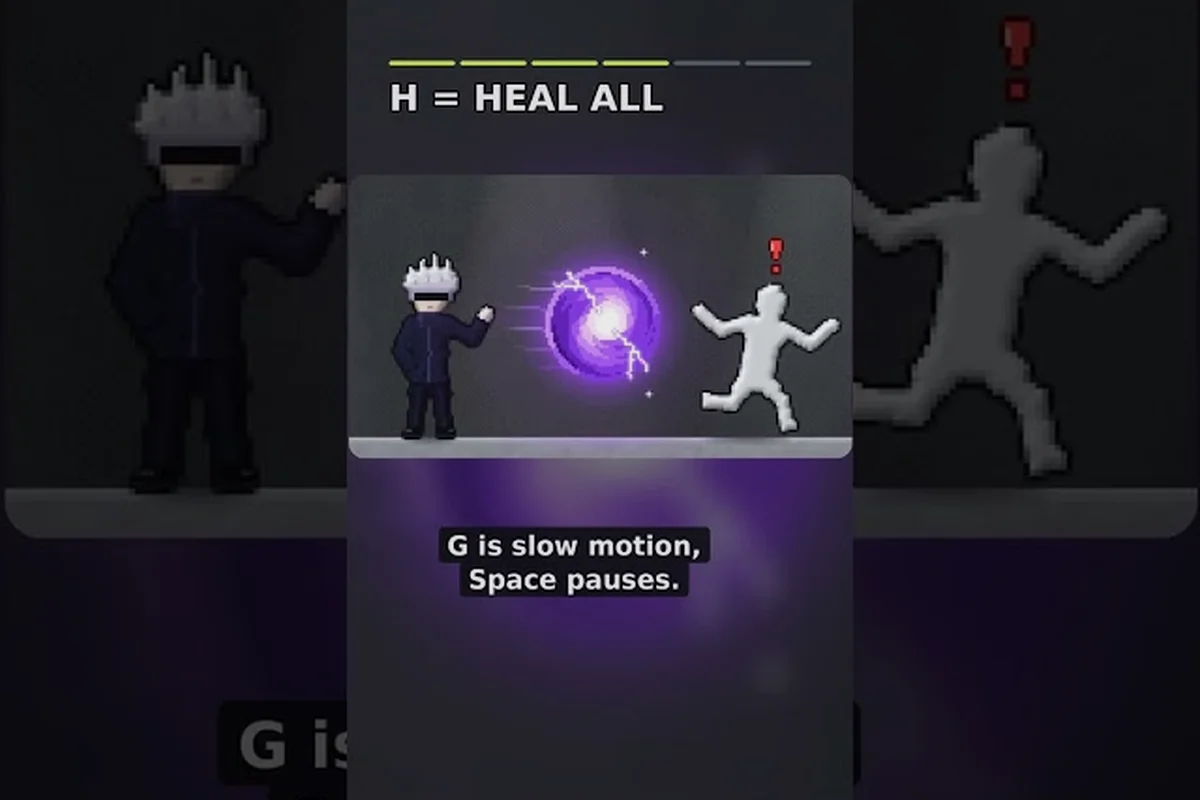
Choosing the strongest ability in Ragdoll Playground matters because each power changes the physics of the room rather than simply adding another weapon. The best Ragdoll Playground best powers 2026 shortlist covers the current four official options—black holes, tornadoes, meteors, and time stop—and explains which situations each one controls best.
powers overview
Ragdoll Playground currently offers four published powers: black holes, tornadoes, meteors, and time stop. That list appears on the official Ragdoll Playground game page, which is the best source for confirming the current power roster. Slow motion is also available, but it is a separate control rather than a fifth power.
The ranking below evaluates each ability by three useful measures: destructive reach, environmental control, and creative flexibility. A power can lead the list even when it does not create the largest explosion because positioning, timing, and the ability to manipulate nearby objects often matter more in a physics sandbox.
| Power | Best use | Main advantage | Main limitation |
|---|---|---|---|
| Black hole | Absorbing and launching objects | Broad environmental control | Indirect positioning |
| Tornado | Moving and spinning targets | Precise environmental control | Narrower area than a meteor |
| Meteor | Immediate area destruction | Fast, dramatic impact | Requires safer positioning |
| Time stop | Precise object manipulation | Excellent timing and placement | Limited direct destruction |
This makes the Ragdoll Playground powers easy to compare without inventing hidden statistics. The official page does not publish damage numbers, cooldowns, or distance values for these abilities, so the ranking focuses on observable behavior rather than unsupported numbers. In practical terms, a meteor can clear a tightly clustered group with one impact, while a tornado can separate and redirect targets farther across the map; similarly, black-hole effects excel at pulling objects into a controllable cluster, and time stop is best judged by how accurately it freezes placement. The absence of published values means the comparison should rely on these visible in-game effects, not fabricated damage or cooldown figures.
What counts as the best power?
A power earns a high rank when it can affect multiple bodies, create a dramatic result, or open interactions with another tool. Black hole is strongest for sustained manipulation, while meteor offers the clearest instant destruction. Tornado sits between them because it controls movement without matching a meteor’s sudden impact.
The ranking changes with the objective. A meteor is the practical choice for immediate destruction, but a tornado can be better when the goal is to carry a target into another hazard. Time stop is less destructive, yet it can make precise placement much easier. Understanding those differences prevents a single “strongest” label from obscuring the most effective option for a particular experiment.
Current roster at a glance
The official list is compact enough that players can test every serious contender. Community walkthroughs, such as Blueburry’s Ragdoll Playground guide, also show the on-screen selector and demonstrate how these abilities appear in the room.
| Rank | Power | Overall tier | Best category |
|---|---|---|---|
| 1 | Black hole | S | Environmental manipulation |
| 2 | Meteor | A | Destructive impact |
| 3 | Tornado | A | Object control |
| 4 | Time stop | B | Precision and timing |
This four-option roster means the ranking is complete: there are no hidden powers to insert between these entries. It also keeps the advice practical, because each pick can be tested directly rather than inferred from a larger theoretical roster.
Black hole leads the powers ranking
Black hole ranks first because it can influence the surrounding area continuously. Rather than producing one isolated burst of damage, it changes where nearby bodies travel. That makes it valuable for experiments involving several props, a held target, or a chain of collisions.
Its greatest strength is gravitational control. A player can place the ability near a target and redirect the resulting movement toward another object, hazard, or edge of the room. The result is less like a traditional explosion and more like a miniature physics event that the player can shape through positioning.
Why black hole earns the top spot
A black hole combines reach, persistence, and follow-up potential. It can affect objects that are already moving, allowing the player to redirect a falling body or pull one object toward another. That makes it especially effective in creative scenarios where the result matters more than the initial blast.
The power also works well as a bridge between normal weapons and environmental effects. A weapon can start a collision, while a black hole controls where the involved bodies go next. Players learning the broader Ragdoll Playground beginner guide can use that relationship to understand why positioning often changes the outcome more dramatically than repeatedly selecting a different weapon.
| Factor | Black hole performance | Practical reason |
|---|---|---|
| Initial destruction | Moderate | The main effect comes from movement rather than a single blast |
| Area influence | Excellent | Nearby bodies can be pulled into its gravitational field |
| Follow-up control | Excellent | Targets can be redirected toward another effect |
| Precision requirement | High | Placement strongly affects the outcome |
| Creative potential | Excellent | It supports chains, collisions, and staged scenarios |
Black hole’s weakness is that it is less dramatic than a meteor and less immediately understandable than a tornado. If the target is far away, outside the power’s effective area, or blocked from reaching it, the result can be weak. The key lesson is to place the black hole close enough to influence the intended body without trapping it too early.
Best black hole techniques
The most effective technique is to use the gravity effect as a redirector. Position the power near the route a target will naturally take, then let the altered path carry the body into a second interaction. This is more capable than repeatedly activating the ability in open space.
A useful sequence is to tempo the black hole’s pull instead of relying on one continuous activation: guide a ragdoll toward the center, then briefly redirect the force with another destructive power or environmental object. This creates a curved collision path that can send the body into a hazard, wall, or the next black hole. In practice, chaining a black hole with a meteor or tornado is more controllable than dumping every target into one crater, because the first power can establish momentum and the second can finish the impact.
-
Move the target toward the intended impact area with a weapon or the player’s grab control.
-
Activate the black hole beside its path rather than directly underneath it.
-
Watch for another body, hazard, or edge that can become the next stage.
-
Reset the room if the bodies settle into an unusable cluster.
This approach turns the black hole from a standalone effect into a physics routing tool, using its pull to bend a ragdoll’s trajectory instead of merely pulling it into one impact crater. It also allows a quieter setup than a large explosion, which can be useful when the desired outcome depends on a precise collision. For example, activate the black hole beside a falling body so its altered path meets a meteor, wall, or tornado at the intended angle; the reduced blast footprint makes the chain easier to control while preserving the same destructive payoff.
Meteor delivers the strongest destructive impact
Meteor is the best choice for immediate destruction. It produces a conspicuous impact in a concentrated area, making it easier to see than a subtle pull and more forceful than a tornado’s rotational force. Its appeal comes from speed and clarity: the room responds almost immediately after activation.
The Ragdoll Playground meteor is therefore a strong choice when the objective is to destroy the dummy, overwhelm a group of targets, or create an unmistakable event. If the goal is simply to maximize visible damage, this destructive power has fewer complications than the alternatives.
Meteor versus black hole
A direct comparison reveals two different kinds of power. The meteor wins on immediate impact, while the black hole wins on continued manipulation. One erases or launches nearby bodies with little setup; the other changes their trajectories and creates longer interactions.
| Test | Meteor | Black hole |
|---|---|---|
| Fast destruction | Winner | Runner-up |
| Controlled direction | Limited | Winner |
| Visible crowd impact | Winner | Moderate |
| Multi-stage setups | Moderate | Winner |
| Low positioning effort | Winner | Requires care |
| Long-form creativity | Strong | Strong |
The meteor is also easier to use when a player does not yet understand the room’s collision layout. However, greater power does not automatically mean greater accuracy. An effect can affect a large region yet still miss a small target if the activation point is poorly chosen.
Best meteor setups
Meteor performs best when the target is placed inside a clear area with enough space for the effect to register. Keep surrounding objects from blocking the impact, and treat the dummy as a stationary target when measuring the result. The Ragdoll Playground meteor effect overview provides a focused look at this power’s physics and use cases.
A strong destructive setup follows a simple sequence: first position the ragdoll where the Meteor’s impact radius can cover the target, then trigger the power and let the full knockback and physics chain resolve before testing another configuration. This matters because Ragdoll Playground calculates environmental-power interactions from the active bodies and nearby objects; changing the camera angle afterward may preserve the result, but moving the dummy can alter the collision path and make the comparison less consistent. For a practical 2026 build test, record whether the dummy is launched, whether nearby props contribute secondary impacts, and how far the body travels after the Meteor lands. These observations make Meteor easier to compare with Tornado and other destructive powers without confusing positioning changes with differences in raw destructive force.
-
Place the target in an open zone rather than against a wall.
-
Check that no unrelated body occupies the intended impact path.
-
Activate the meteor once and observe the entire area instead of reacting to the first movement.
-
Repeat from a different angle if the first test checks reach rather than raw destruction.
Avoid stacking multiple activations before observing the result. It can be tempting to create a larger event, but the interaction becomes difficult to analyze if several effects overlap. One clean meteor followed by a reset is usually more informative than an uncontrolled sequence.
Tornado and time stop complete the power ranking
Tornado ranks third because it combines environmental influence with an easily recognizable shape. It can pull bodies through a rotating column, making it useful when the desired result depends on movement rather than a single impact. It is also a better fit than black hole for experiments centered on swirling, spinning, and repeated contact.
Tornado strengths and limitations
A tornado’s strength is its directional movement effect. It can move loose objects toward or around another body, while its visible column makes the direction of action easy to follow. This makes it more readable than a black hole in a crowded test and more flexible than a meteor when a target must remain in motion.
Its main limitation is reach. Compared with the immediate area affected by a meteor, the tornado generally works best within a narrower zone. It also creates less predictable results when too many rigid props surround the target. The Ragdoll Playground tornado mechanics guide explains more about environmental reactions that can make either effect easier to stage.
| Use case | Tornado | Time stop |
|---|---|---|
| Spinning several bodies | Excellent | Moderate |
| Precise object placement | Moderate | Excellent |
| Long continuous movement | Excellent | Limited |
| Obvious visual effect | Excellent | Subtle |
| Direct destruction | Low | Low |
| Timing-based setups | Good | Excellent |
The tornado is especially useful in a challenge that requires moving a body through a narrow route. It can complement a weapon: aim the initial strike so the tornado catches the target afterward. That sequence creates a cause-and-effect chain that is more interesting than either component alone.
Where time stop fits
Time stop is the precision specialist, ranking fourth for direct destruction but remaining essential for advanced setups. It offers control over timing, allowing a player to reposition or interact with bodies while the rest of the scene is effectively paused. That makes it best used as a setup tool rather than the final blow.
Time stop differs from the separate slow-motion control. Slow motion changes the speed of play without introducing a full stop, while the power provides a distinct timing advantage. The time stop power guide explains that distinction and its practical uses.
| Strength | Time stop advantage |
|---|---|
| Accurate placement | Bodies can be arranged while motion is halted |
| Safer experimentation | The scene can be inspected before movement resumes |
| Complex sequencing | Multiple actions can be planned before release |
| Chain setup | A paused body can be positioned for a later effect |
Its limitation is straightforward: time stop does not inherently destroy anything. It becomes powerful when it gives the player a cleaner black-hole pull, tornado alignment, or meteor strike. The best result usually comes from using it briefly and releasing the scene into the intended effect.
Best power combinations for creative scenarios
In Ragdoll Playground, the strongest powers often work better as a chain than as a single all-purpose ability: a Tornado can launch the ragdoll, Meteor can add a falling impact, and a redirecting power can steer the target into the desired path. Give each ability one clear role—movement initiation, direction control, and destructive impact—so the effects stack without canceling one another.
Black hole plus tornado
Black hole and tornado both influence motion, so using them together requires deliberate positioning. The tornado can send a body toward the black hole, while the black hole keeps it moving after it enters the field. Begin with the tornado because its motion is easier to observe, then add the black hole when the target approaches.
Meteor after black hole
A black hole can gather or redirect a target before the meteor lands. That makes the sequence useful when the desired result requires a target to be inside a particular area at impact. The black hole should remain secondary; otherwise, the target may move unpredictably instead of meeting the intended impact point.
Time stop before any power
Time stop works as the setup stage for every other choice. Pause the scene, position the target, and then release it into the tornado, black hole, or meteor. This reduces wasted activations and makes it easier to compare power placement under similar conditions.
| Combination | Setup role | Finisher role | Best scenario |
|---|---|---|---|
| Black hole + tornado | Tornado gathers or redirects | Black hole sustains motion | Swirling collision chains |
| Black hole + meteor | Black hole aligns target | Meteor supplies impact | Targeted destruction |
| Time stop + tornado | Time stop positions target | Tornado controls movement | Precision launches |
| Time stop + meteor | Time stop confirms alignment | Meteor creates impact | Repeatable staged hits |
These combinations work best when each stage has one job. For example, let the black hole align and hold the target, then use the tornado to redirect it into the meteor for impact; changing only the tornado’s angle in the next test avoids confusing a weak collision with an incorrectly positioned target. Because a tornado’s pull, a black hole’s gravity, and a meteor’s impact affect the ragdoll differently, testing one stage at a time makes it easier to identify which power produced a specific movement and adjust only that stage.
Power testing checklist and final recommendation
A reliable ranking should come from consistent tests rather than whichever effect looks biggest on first use. Use the same dummy placement, reset between trials, and compare the ability under consistent conditions. The room reset and healing functions are covered in the Ragdoll Playground sandbox tips.
-
Keep the target position consistent so an environmental effect is not confused with a better starting point.
-
Test one power at a time before combining abilities.
-
Observe the full movement sequence, including what happens after the initial effect.
-
Reset before each trial to avoid leftover bodies changing the result.
-
Record the intended goal, such as destruction, redirection, lifting, or precise placement.
| Test | Black hole | Meteor | Tornado | Time stop |
|---|---|---|---|---|
| Immediate destruction | Low | Excellent | Low | Very low |
| Nearby body control | Excellent | Moderate | Excellent | Moderate |
| Precision placement | Moderate | Low | Moderate | Excellent |
| Crowd-scale spectacle | Moderate | Excellent | Strong | Low |
| Ease of positioning | Moderate | Strong | Moderate | Strong |
The final recommendation is simple: choose black hole for the most versatile and creative power, meteor for direct destruction, tornado for readable environmental movement, and time stop for careful setup. These are the Ragdoll Playground best powers 2026 because each one serves a distinct role within the sandbox, and the complete roster leaves no need to search beyond the four officially published choices.
Frequently Asked Questions
What is the strongest power in Ragdoll Playground?
Black hole is the strongest overall pick because it offers the greatest combination of environmental reach, sustained manipulation, and follow-up potential. Meteor is the more destructive option for immediate impact, while tornado and time stop specialize in movement and setup rather than raw power.
Is the meteor better than the tornado?
The meteor is better for immediate destruction because it produces a fast, concentrated impact. The tornado is better for sustained movement, rotation, and carrying nearby bodies. Choosing between them depends on whether the goal is to destroy the target immediately or manipulate how it travels through the room.
Can time stop be combined with other powers?
Yes, and time stop is most valuable as a setup power. You can pause the scene, place a body more precisely, and then release it into a black hole, tornado, or meteor. Brief positioning is usually more effective than leaving time stopped active while experimenting.
Are slow motion and time stop the same power?
No. Slow motion is a separate control bound to G, while time stop is one of the four officially published powers alongside black holes, tornadoes, and meteors. Slow motion changes the pacing of normal play; time stop provides a distinct timing effect for staged setups.
Which power should beginners use first?
Meteor is the easiest starting point for learning destructive placement because its effect is immediate and easy to recognize. Tornado is also approachable and offers more control. Players can then test black hole and time stop to understand how sustained gravity and precise setup differ from a direct impact.